
Slip, Trip & Fall

Las Vegas Slip and Fall & Premises Liability Attorneys
Fighting for Fall Injury Victims Across Nevada
Even a same-level fall can turn serious fast: the National Safety Council reports that workplace falls injured nearly 480,000 people badly enough to require time off work in 2024, and 145 workers died in falls that happened on the same level, not from any height at all. Older adults face an even steeper risk: The CDC reports that adults 65 and older account for roughly 800,000 fall-related hospitalizations every year, with more than 65% of those injuries also happening on a same-level walking surface. A wet floor, a torn piece of carpet, or a poorly lit stairwell is often all it takes.
En Carter Cullen, our Las Vegas slip and fall attorneys hold negligent property owners accountable when their failure to maintain a safe premises leaves someone seriously hurt. Whether your fall happened in a casino, a hotel, a restaurant, or simply while running errands, our team is ready to fight for the recovery you deserve.
Contact us online or call 702.800.0000 today to schedule your free and confidential consultation.
What Is a Premises Liability Claim in Nevada?
A slip and fall or trip and fall claim is a form of premises liability, the area of Nevada law that holds property owners responsible when a dangerous condition on their property causes someone injury. Property owners, whether they run a casino, own a rental home, or manage a shopping center, have a legal duty to keep their premises reasonably safe for anyone lawfully on them.
When a property owner knows about a hazard, or should have known about it, and fails to fix it or warn visitors, they can be held liable for the injuries that result. Importantly, Nevada law does not let a property owner escape liability just by arguing the hazard was "open and obvious." If you slipped on a puddle of spilled soda in a grocery store, you can still pursue a claim even if the puddle was, in theory, visible before you fell in it.


Proving a Slip, Trip & Fall Claim in Nevada
To succeed in a slip and fall lawsuit, you generally need to establish four things:
Deber de cuidado: The property owner owed you a duty to maintain a reasonably safe environment. This duty applies to lawful visitors, including customers, guests, tenants, and employees, and Nevada law even requires owners to avoid intentionally harming trespassers when injury could otherwise be prevented.
Incumplimiento del deber: The property owner knew about the dangerous condition, or the condition existed long enough that a reasonable inspection would have caught it, and they failed to fix it or warn visitors.
Causalidad The unsafe condition directly caused your fall and your injuries.
Daños: Your injuries resulted in real, provable losses, whether medical bills, lost income, or pain and suffering.
Knowledge of a hazard can be shown a few different ways: The property owner created the condition themselves, they knew about it and ignored it, or the condition sat there long enough that they reasonably should have discovered it. This last category, often called constructive notice, is where most slip and fall cases are actually won or lost.
The Importance of Evidence in a Slip, Trip & Fall Case
Building a strong claim means gathering everything available: incident reports, surveillance footage, witness statements, photographs of the hazard, and any physical evidence tied to the scene.
Our attorneys can promptly send a written preservation notice to the property manager, directing them to retain any surveillance footage or records related to your fall. This matters because footage from casinos, hotels, and retailers often gets overwritten within days if no one requests it be saved. Property owners and their insurers frequently withhold this information unless a lawsuit is actually filed, so acting quickly protects your case before evidence disappears.
Common Locations for Slip, Trip & Fall Claims in Las Vegas
Las Vegas's high foot traffic, tourism volume, and desert climate create specific fall risks found less often elsewhere.
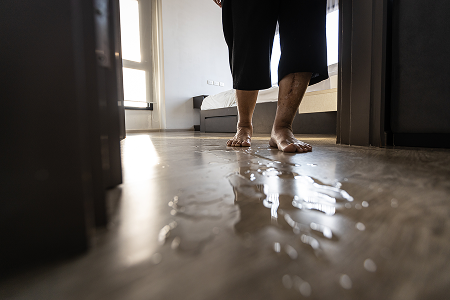
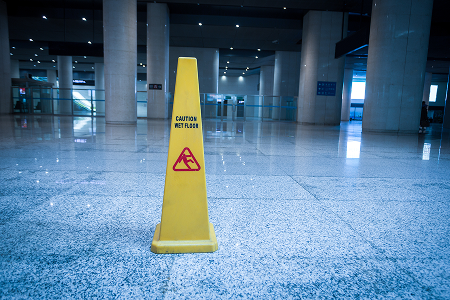
Hotels and Casinos: Wet or slippery floors from spills, cleaning products, and water leaks are common in hotels and casinos, along with uneven flooring and loose carpeting in high-traffic areas.
Swimming Pools: With so many hotels and resorts maintaining pools, thousands of pool-area falls happen in Las Vegas each year, often tied to faulty equipment or a lack of lifeguard supervision.
Restaurants and Bars: Spilled food and drinks, grease on kitchen and floor surfaces, and uneven flooring make restaurants and bars a frequent source of fall injuries. If your injury involved an assault or a lack of adequate security rather than a physical hazard like a spill or torn carpet, visit our seguridad negligente page instead.
Retail Stores and Shopping Centers: High foot traffic, spills, and cluttered walkways create ongoing fall risk in grocery stores, retail shops, and shopping centers.
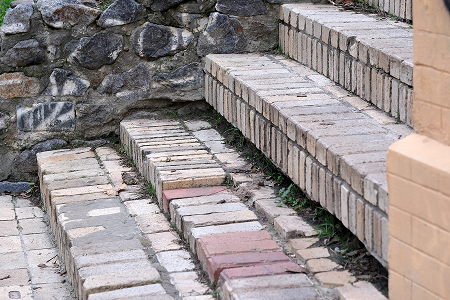
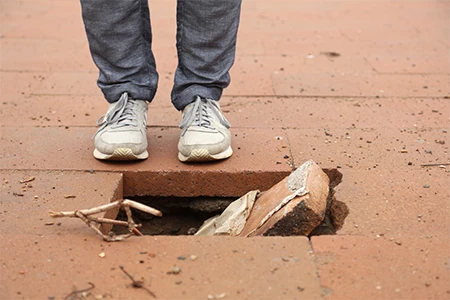
Parking Lots and Garages: Poor lighting, cracked pavement, and uneven curbs contribute to falls in parking structures, particularly at night.
Hotel Shuttles and Bathtubs: Guests have been injured boarding and disembarking hotel shuttles, and slippery bathtubs without a textured surface or rubber mat remain a recurring source of hotel injury claims.
Convention and Event Venues: Temporary flooring, cabling, and staging set up for conventions, concerts, and trade shows can create tripping hazards that a permanent building wouldn't have. Event organizers and venue operators are responsible for managing these risks just as much as any permanent property owner.
How Las Vegas's Climate Contributes to Falls
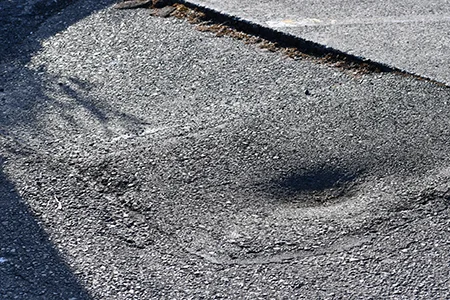
Extreme summer heat can warp or soften asphalt and outdoor surfaces, creating unexpected tripping hazards in parking lots and walkways. The city's rare, but heavy rainstorms can just as quickly overwhelm poor drainage, leaving walkways and entrances slick with standing water. Property owners are expected to anticipate both conditions and respond to them promptly, not wait until someone gets hurt.

Who Can Be Held Liable for a Slip, Trip & Fall in Nevada?
Depending on where and how your fall happened, liability can rest with a single property owner or be shared among several responsible parties, including:
- Homeowners and condo owners
- Operadores minoristas
- Restaurant and bar owners
- Operadores de hoteles y casinos
- Landlords and property management companies
- Event organizers and venue operators
- Entidades gubernamentales
A landlord in Nevada can be held liable for a tenant's or visitor's fall if they were negligent in maintaining the property, such as failing to repair a broken stair or a known plumbing leak, though a lease agreement may also assign certain maintenance duties to the tenant. Government-owned properties follow different notice requirements than private ones, so it's worth confirming which rules apply to your situation early on.
If your fall happened at a friend or family member's home, you may hesitate to bring a claim out of concern for the relationship. Homeowners carry insurance for exactly this reason, and if the property is a condo or other multi-family housing, the homeowners' association may bear responsibility instead of your friend personally.
Nevada's Comparative Negligence Law and Your Claim
Nevada follows a modified comparative negligence rule. If you're found partially at fault for your own fall, your compensation is reduced by your percentage of fault, but you can still recover as long as you're not found more than 50% responsible. For example, a $100,000 claim reduced by 20% fault results in an $80,000 recovery.
This makes early, thorough documentation critical. Insurance companies routinely try to inflate an injured person's share of fault specifically because it reduces what they have to pay, and a detailed investigation is often what stands between a fair settlement and a lowball offer.

Nevada's Statute of Limitations for Slip, Trip & Fall Claims
Under Nevada law, you generally have two years from the date of your injury to file a premises liability lawsuit. Missing this deadline typically means losing your right to recover, regardless of how strong your case is. The same two-year window applies when a fall results in a fatal injury, giving the decedent's family or estate the right to bring a muerte por negligencia claim.
What to Do Immediately After a Fall
Seek medical attention first, even if your injuries seem minor at the time, since some injuries don't become apparent until hours or days later. Once you're safe, document the scene: Photograph the hazard, get contact information from any witnesses, and report the incident to the property owner or manager. Ask for a copy of any incident report that gets filed. Then, contact a premises liability attorney before speaking with the property owner's insurance company.

Why Choose Carter Cullen for Your Slip, Trip & Fall Case
Las Vegas y el condado de Clark experimentan: We practice in the courts where these cases are litigated and understand the specific obligations Nevada law places on hotels, casinos, and commercial property owners.
Investigación exhaustiva: We work with our own investigators to secure surveillance footage, incident reports, and maintenance records before they disappear.
Defensa enérgica: We prepare every case as though it's going to trial, which is often exactly what pushes an insurer toward a fair settlement instead of a lowball offer.
Sin costo inicial: We handle slip and fall and other premises liability cases on a contingency fee basis. You pay nothing unless we recover compensation on your behalf.
Preguntas frecuentes
Nevada law generally requires you to file a premises liability lawsuit within two years of your injury. This same deadline applies if a fall results in a fatal injury, giving the family the right to bring a wrongful death claim instead.
You can still recover compensation under Nevada's comparative negligence law as long as you're not found more than 50% at fault. Your award is simply reduced by your percentage of responsibility.
Get medical attention first, then document the scene with photos, collect witness information, and report the incident to the property owner or manager. Speak with an attorney before giving a statement to any insurance company.
Seek medical attention first, even if you feel fine, then document the scene with photos of the hazard, get contact information from any witnesses, and report the incident to the property owner or manager on-site. Ask for a copy of any incident report before you leave. Because Las Vegas properties like hotels and casinos often overwrite surveillance footage quickly, contact a Las Vegas slip and fall attorney as soon as possible so evidence can be preserved before it disappears.
Yes, especially when a fall causes lasting psychological impact or requires professional treatment. Medical testimony and documentation of therapy are typically needed to support this part of a claim.
Injuries range from sprains, fractures, and dislocated joints to lesiones traumáticas cerebrales y spinal cord damage. Falls are the leading cause of traumatic brain injury in the United States, accounting for nearly half of all TBI-related emergency room visits.
Contact Our Las Vegas Slip, Trip & Fall Attorneys Today
You shouldn't have to cover your own medical bills and lost wages because a property owner failed to keep their premises safe. Call Carter Cullen today at 702.800.0000 o contáctenos en línea to schedule your free, confidential consultation. We handle every case on a contingency fee basis, so there's no cost to you unless we win.

Reach out to us today to schedule your appointment with our Las Vegas Slip, Trip & Fall Attorneys

Póngase en contacto
Contáctenos hoy
 English
  Spanish